
Improve FIX Search Results: How to Phrase Your Home Repair Needs
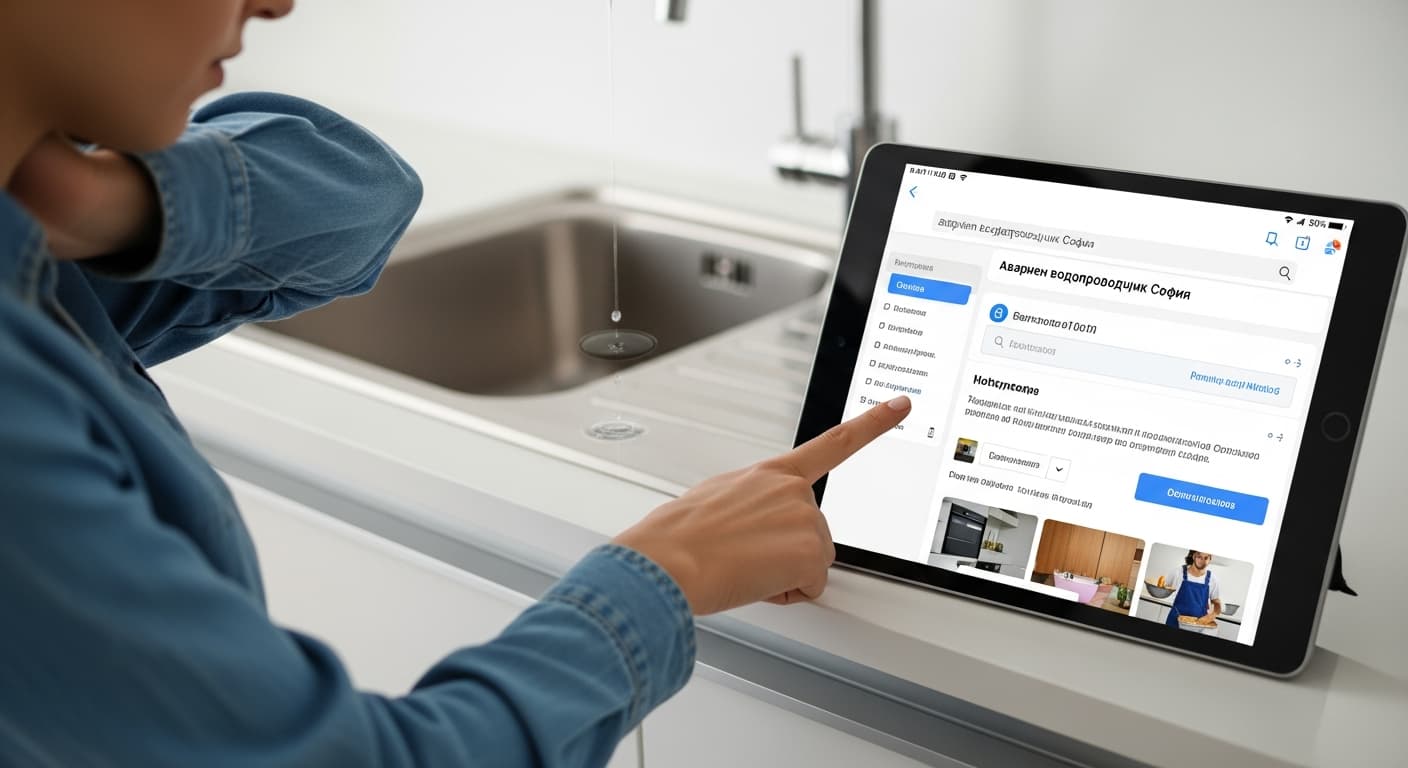
FIX employs artificial intelligence to connect your home repair requests with suitable professionals. The precision of this matching directly correlates with the clarity and specificity of your description. This guide outlines how the AI interprets your input and provides strategies for phrasing your needs to achieve optimal results.
How FIX's AI Interprets Your Request
When you submit a service request, the FIX AI system performs several operations to understand your needs. It does not simply look for exact keyword matches. Instead, it processes your description to extract key entities, identify the underlying problem, and determine the required actions.
The system first identifies core components such as the type of service (e.g., plumbing, electrical, carpentry), the specific object involved (e.g., sink, light switch, door), and the action required (e.g., repair, replace, install). It then performs a semantic analysis, looking for synonyms and related concepts to broaden its understanding. For instance, "faucet leak" and "tap dripping" are understood as similar issues requiring a plumber. Contextual clues, such as mentioning "bathroom" or "kitchen," help narrow down the scope of the problem.
The AI prioritizes specific details. A description like "my boiler is not working" is less effective than "my gas boiler in the kitchen is making a loud banging noise and not producing hot water." The latter provides crucial diagnostic information that helps the AI identify professionals with specific expertise in gas boiler diagnostics and repair, rather than just general heating technicians.
Be Specific with the Problem and Task
Clarity regarding what is broken and what needs to be done is paramount. Avoid vague terms that could apply to multiple situations. Instead of stating "broken pipe," specify "leaking PVC pipe under the kitchen sink, needs replacement." This immediately tells the system the material, location, and the exact service required.
Quantify and locate the issue whenever possible. For electrical work, "install three new light fixtures in the living room ceiling" is far more useful than "install lights." For carpentry, "repair two broken hinges on the main entrance door" provides a clear scope of work. These details help the AI match you with professionals who are prepared for the specific scale and nature of the job.
Clearly differentiate between repair, replacement, and installation. A "leaking washing machine" could mean a simple hose tightening (repair), a new part (replacement), or needing an entirely new appliance connected (installation). Each requires different skills, tools, and potentially different types of professionals. Stating "washing machine is leaking from the drain hose, needs drain hose replacement" leaves no room for ambiguity.
Include Materials and Dimensions
The materials involved in a repair or installation significantly influence the tools and expertise required. A "fence repair" could involve wood, metal, or concrete. Specifying "wooden fence repair, five panels damaged" ensures the professional arrives with appropriate carpentry tools and materials, or at least knows what to expect.
Dimensions and quantities are equally important for accurate quoting and preparation. When requesting painting, "paint a 20 m² bedroom" is more informative than "paint a room." For roofing, "replace 5 broken roof tiles on a sloped roof" gives the professional an idea of the task's scale and potential safety equipment needed. This also helps in estimating the time commitment and material costs upfront.
Mentioning whether you will supply materials or if the professional needs to procure them is also helpful. For example, "install new bathroom tiles, I have purchased the tiles already" versus "install new bathroom tiles, professional to supply standard white ceramic tiles for 10 m²." This pre-empts questions and streamlines the process.
Describe the Location and Urgency
Providing the precise location within your property helps the professional understand the context and potential access challenges. "Bathroom fan replacement, second-floor bathroom" is better than just "fan replacement." For exterior jobs, "garden shed roof repair" provides clarity.
While all home repairs feel urgent to the homeowner, it is important to describe true urgency accurately. "Urgent boiler repair, no hot water for two days" signals a critical issue requiring immediate attention. However, simply marking every request as "urgent" without a genuine reason can dilute the effectiveness of this filter for truly critical situations. Use "urgent" only when the issue poses a safety risk, causes significant discomfort, or prevents essential functions of the home.
A precise description ensures the AI connects you with a professional who possesses the exact skills and tools required for your task. This saves time for both parties and leads to a more efficient resolution. For complex or time-consuming repairs, describing the issue clearly on FIX is the first step towards booking a qualified local professional.