
Five Common Plumbing Leaks: DIY Fixes Under 15 Minutes
Plumbing leaks are an inevitable part of home ownership, ranging from a minor nuisance to a significant water damage risk. Understanding the cause and severity of a leak can save time and money, helping you decide whether to grab a wrench or book a professional. This guide covers five common household leaks and outlines simple repairs that often take less than 15 minutes to complete.
Dripping Faucets
A constantly dripping faucet is not only annoying but also wasteful, potentially adding hundreds of litres to your water bill each year. Most often, the culprit is a worn-out washer or O-ring inside the faucet.
The Quick Fix
Turn off the water supply to the faucet, usually via a shut-off valve under the sink. Use a screwdriver to remove the decorative cap and handle. Access the faucet stem and replace the worn rubber washer or O-ring. Reassemble the faucet, ensuring all connections are snug. This process typically requires a screwdriver, an adjustable wrench, and a replacement washer kit, costing a few lev and taking about 10-15 minutes.
When to Book a Pro
If the leak persists after replacing the washer, or if the faucet body itself appears damaged, the issue might be more complex, such as a corroded valve seat or a damaged cartridge. In these cases, a professional plumber can diagnose and repair the specific internal component or advise on replacement.
Leaky Toilet Base
Water pooling around the base of a toilet can indicate several problems, from a loose connection to a compromised wax ring. A simple leak often stems from loose bolts.
The Quick Fix
Inspect the two closet bolts at the base of the toilet. If they are loose, gently tighten them with an adjustable wrench. Avoid overtightening, as this can crack the porcelain. Also, check the water supply line connection at the back of the toilet tank; a loose nut here can cause a slow drip. This fix takes about 5-10 minutes and requires only an adjustable wrench.
When to Book a Pro
If tightening the bolts does not resolve the leak, or if water appears to be seeping out during a flush, the wax ring seal between the toilet and the drainpipe may be faulty. Replacing a wax ring involves removing the toilet, which is a heavier, more involved task that often requires two people and proper sealing techniques to prevent future leaks. A FIX plumber can handle this efficiently.
Under-Sink Pipe Leaks (P-Trap)
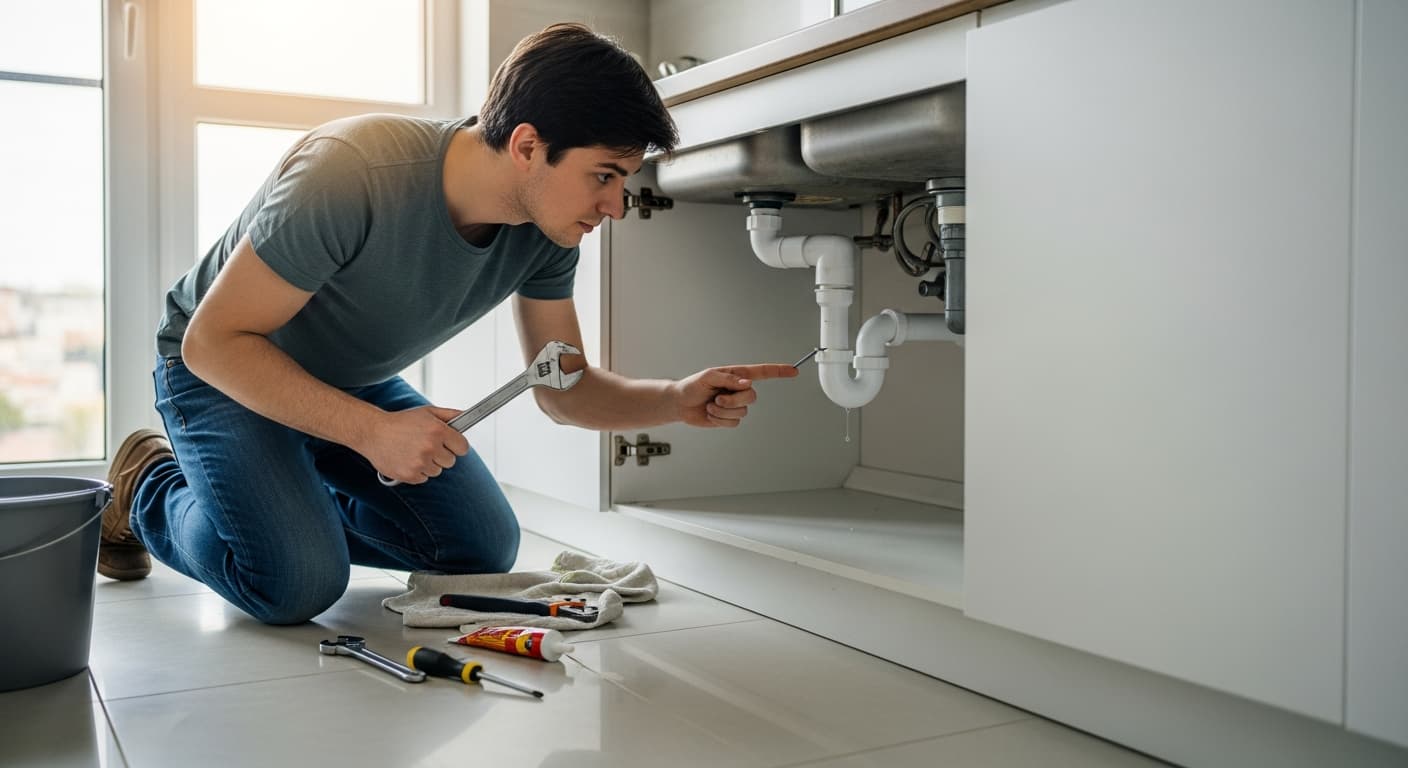
Leaks under the kitchen or bathroom sink are frequently due to loose connections on the P-trap or other drain components. The P-trap is the curved pipe directly under the drain that holds a small amount of water to prevent sewer gases from entering the home.
The Quick Fix
Place a bucket under the P-trap to catch any drips. Many P-trap connections are secured with slip nuts that can be tightened by hand or with a gentle turn of channel-lock pliers. If the leak persists, disassemble the P-trap, inspect the plastic or rubber washers inside the slip nuts for cracks or wear, clean any debris, and reassemble. This typically takes 5-10 minutes.
When to Book a Pro
If the pipes themselves are cracked, corroded, or if the leak originates from a connection further up the drain line or within the wall, professional intervention is necessary. These issues can require pipe replacement or more extensive diagnostic work.
Shower Head Leaks
A shower head that drips after being turned off, or leaks from its connection point to the wall, is usually an easy fix.
The Quick Fix
Most shower head leaks occur where the head connects to the shower arm extending from the wall. Turn off the water supply to the shower. Unscrew the shower head, clean the threads on both the arm and the head, and wrap new plumber's tape (Teflon tape) clockwise around the threads of the shower arm. Re-attach the shower head and tighten securely. This repair usually takes about 5-10 minutes and requires an adjustable wrench and a roll of plumber's tape, which costs only a few lev.
When to Book a Pro
If the leak appears to be coming from behind the wall or if the water pressure is significantly reduced alongside the leak, there might be an issue with the internal plumbing or diverter valve. These require opening the wall and are best left to a qualified plumber.
Refrigerator Water Line Leaks
Many modern refrigerators have a water dispenser and ice maker, connected to the home's water supply via a thin plastic or copper line. Leaks often occur at the connection points.
The Quick Fix
Turn off the water supply to the refrigerator, usually via a small shut-off valve behind the appliance or under the nearest sink. Gently tighten the compression fittings at both the refrigerator's inlet valve and the main water supply valve using an adjustable wrench. Ensure the water line itself isn't kinked or visibly damaged near the connections. This fix typically takes 5-10 minutes.
When to Book a Pro
If the water line itself is visibly cracked or punctured, or if the leak originates from within the refrigerator's internal components, a professional appliance technician or a plumber is needed. Replacing a damaged water line requires precise cutting and fitting, ensuring a leak-free connection.
Addressing small leaks promptly can prevent larger, more expensive damage. While many minor plumbing issues are suitable for a quick DIY repair, knowing when to call a professional is crucial. For persistent leaks, complex pipe repairs, or any task beyond your comfort level, booking a qualified plumber through FIX ensures the job is done correctly and efficiently, protecting your home from water damage.